

I Don’t Feel Like a Superhero When I’m Saving Everyone. I Feel Like One When I Stop.
Locamino — Week 1
I’m one week into my Locamino.
An experiment I decided to invest in when I hit a point where I just wanted to step out of the world I’d been living in. Step out of responsibility. Step out of being the literal go-to person to “fix” what felt like everything.
I wanted to take off. Properly. I wanted to get on a plane to Spain and walk the Camino and let the trail do what so many pilgrims say it does — quiet the mind, strip life back to the basics, and return you to with boundless clarity and courage.
But because of the very responsibility I was trying to escape, I couldn’t leave.
So, after some reflection, I decided to bring the essence of the Camino to me — from the streets around me, wherever I am. A local pilgrimage. A month-long container built on silence, walking, and reflection — to see if I could create the same kind of disconnection and inner shift people describe after the Camino experience.
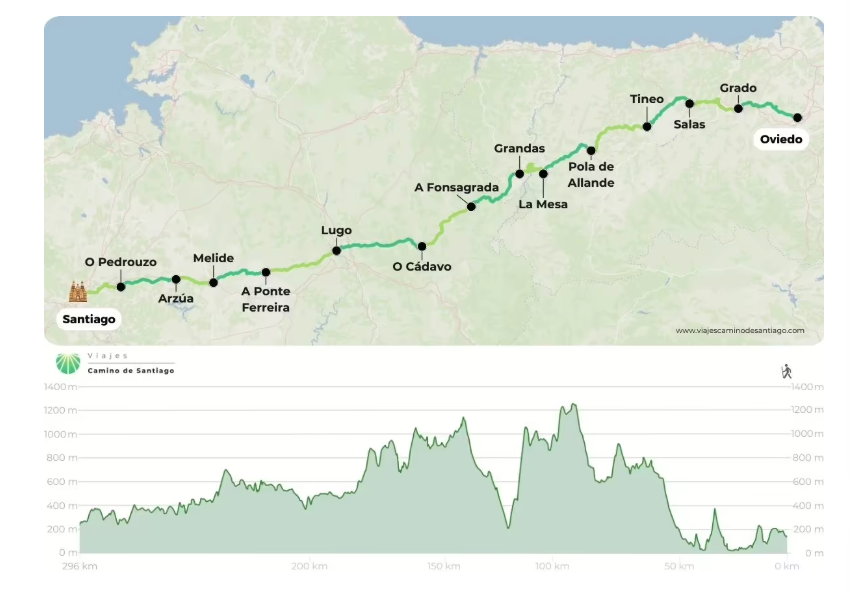
Camino Primitivo Route (the original route)
One week in, I’ve walked 72 kilometres. If I were on the actual Camino Primitivo, I’d have just left the village of Tineo - a popular pilgrim stop.
And something has already shifted in me.
What locamino looks like
Every morning has followed the same rhythm.
I get out of bed early — and I mean early. I get changed, wash my face, brush my teeth, drink a big glass of water, make a coffee, then sit down to journal.
The house is quiet. Candles are lit. I take the writing prompts I’ve prepared, and I write anything that comes—not pretty writing. Not performance writing. Just the truth of what’s in my head.
Then I put my water bottle in my backpack, pull on my trainers and a hat, and walk into the dark morning.
No headphones. No podcast. No music. No audiobook. Just the sound of the day waking up.
And I walk.
The moment it made sense
I had planned to walk alone for the entire Locamino.
Instead, on day 1, I was on dog-walking duty. Once we got past the initial urge to sniff every blade of grass, we found a good pace, and I felt my mind start to clear and my jaw unclench. The journaling, not just the walking, plays a major part in why — it pulls the thoughts out of your head and onto a page. It frees up space. And then, while you’re walking, the questions return… but softer. You can follow them. You can dissect them. You can answer them. Or you can let them pass.
Because my dogs are small, I worried 10 kilometres might be too much for them, so we walked 6 kilometres. I told myself I’d complete the other 4 kilometres after work — and that this would be a good way to disconnect from the day.
When I got home that night from work, my partner and the dogs decided they would join me on my final 4 kilometres.
I knew it was going to be a mistake.
And it was.
The dogs kept stopping. My partner kept talking. I felt myself getting frustrated and even more exhausted than the effects of the day. I wasn’t disconnecting — I was managing. Again. I could feel that familiar “on” switch flip back into place: keep moving, keep everyone happy, keep going.
When I became more and more agitated I finally said, “Can we please do this in silence? I just need a moment.”
We all then walked in calm, silence.
Not long after, it started to rain. I had no umbrella. No rain gear. I was completely ill-equipped.
I didn’t fight it.
I let the rain fall, and we kept walking.
And something happened in that downpour: my nervous system softened. It washed the day off me. The irritation lifted. The pressure dropped. I felt calm — and, weirdly, I felt joy.
It hit me right then:
The walk isn’t the point.
The state the walk creates is the point.
The split: who I am on the walk vs who I am at home
One week in, I feel fantastic.
I’ve looked forward to every morning. I’ve walked anywhere between 6 and 14 kilometres each day. I’ve done it with no headphones and no desire to add them. I’ve loved having my phone on aeroplane mode and being unreachable — not just in practice, but psychologically.
I’ve loved the quiet. The sunrise. The birds. Taking streets, I’ve never taken before and seeing everything through different eyes — because it feels like I have different eyes.
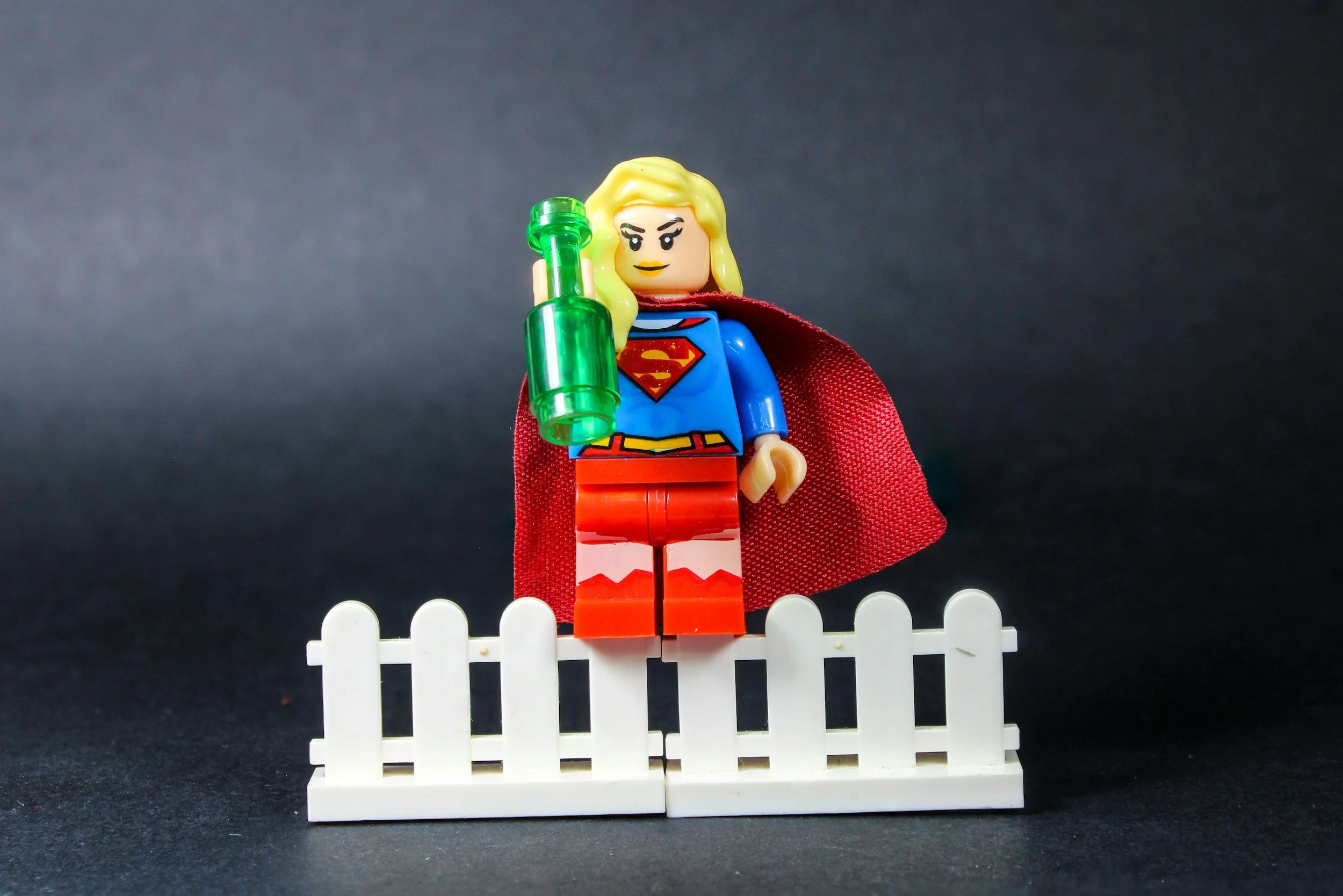
When I’m walking, I literally feel like Superwoman.
Strong. Calm. Powerful. Energised. Curious. Creative. Alive.
And then I get home.
Reality settles back in. Responsibilities return. The day starts demanding things. The questions start coming. People need things. Problems need solving.
And I feel the cape come off.
Here’s the part I didn’t expect — and it’s the thing I can’t stop thinking about:
In every superhero movie, the cape goes on when they’re saving people. Fighting the bad guys. Being needed.
But I feel like a superhero when I’m doing the opposite.
I feel like a superhero when I’m not available.
When I’m not responding.
When I’m not fixing.
When I’m not carrying everyone else’s problems as if they’re mine.
That’s the twist.
Because my “bad guys” aren’t villains. They’re urgency. Constant access. Being the default fixer. Minute-by-minute minutiae. The expectation — spoken or unspoken — that I will always show up, always solve, always hold it all.
And the truth is: that’s what strips the cape off.
Not work itself. Not responsibility itself.
It’s the constant recruitment back into being “on”.
What Week 1 made painfully clear
By the end of the week, a few things had become obvious — not as theory, but as lived experience:
Solitude isn’t a preference — it’s the mechanism. When I’m alone, my nervous system drops. When I’m managing conversation (or dogs), it doesn’t.
Aeroplane mode isn’t a tech setting — it’s a boundary. Being unreachable is medicine. aeroplane mode isn’t a tech setting — it’s a boundary.
Being unreachable is medicine. It’s also confronting, because it proves how conditioned I’ve become to be responsive.
The front door is the battleground. I don’t lose the cape on the walk. I lose it the minute I re-enter everyone’s needs — and default back into being reliable, available, and endlessly useful.
Flexibility matters — guilt doesn’t. Some days I have less time. I still walk. I don’t punish myself for being human.
And finally, yes guilt shows up right on schedule. Taking two hours for yourself triggers guilt — especially when you’re used to being “the responsible one”. But this isn’t selfish. It’s essential.
Week 2: availability redesign
Week 2 isn’t about walking further.
It’s about keeping the state I create on the walk — and carrying it into real life.
Because the hardest part isn’t becoming Superwoman at dawn.
It’s staying with her when the day starts asking for me.
So, this week I’m running a different kind of experiment. Not more “self-care”. Not more habits.
Availability redesign.
Here are three tests I’m running with a goal of wearing my Superhero cape into the day:
The Hand-Off Test
Every time someone brings me a problem, I’m going to ask:
“What have you tried?” and “What do you think we should do next?”
(Not because I don’t care — but because I’m not here to be the default rescuer.)
Response Windows
I’m only going to check messages and emails at set times.
Not all day. Not constantly. Not reflexively.
One Fire a Day
I’m allowed to solve one high-drama problem per day.
Everything else gets parked, delegated, or scheduled.
Because not everything is urgent — it just arrives sounding like it is.
I have no idea which of these will work, if any. I just know I’m done with the version of “hero” that looks like exhaustion and decision fatigue.
The Locamino isn’t a place.
It’s where you earn your cape and work out how to wear it.
And the real pilgrimage isn’t the kilometres.
It’s refusing to take the cape off at the front door when you return.