

ARTICLES AND ESSAYS
My Substack is where I write honestly About choosing creativity, connection and courage over a life half lived.
I Don’t Feel Like a Superhero When I’m Saving Everyone. I Feel Like One When I Stop.
Locamino — Week 1
I’m one week into my Locamino.
An experiment I decided to invest in when I hit a point where I just wanted to step out of the world I’d been living in. Step out of responsibility. Step out of being the literal go-to person to “fix” what felt like everything.
I wanted to take off. Properly. I wanted to get on a plane to Spain and walk the Camino and let the trail do what so many pilgrims say it does — quiet the mind, strip life back to the basics, and return you to with boundless clarity and courage.
But because of the very responsibility I was trying to escape, I couldn’t leave.
So, after some reflection, I decided to bring the essence of the Camino to me — from the streets around me, wherever I am. A local pilgrimage. A month-long container built on silence, walking, and reflection — to see if I could create the same kind of disconnection and inner shift people describe after the Camino experience.
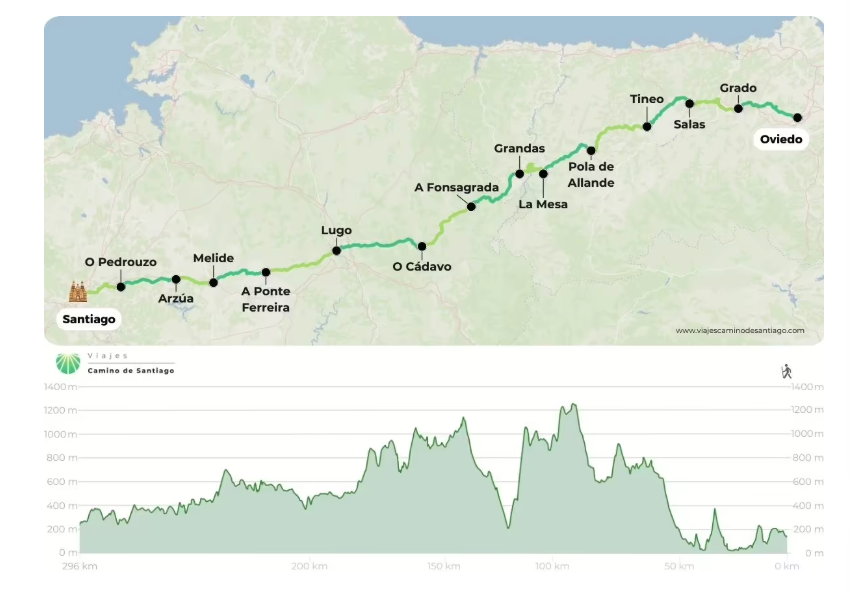
Camino Primitivo Route (the original route)
One week in, I’ve walked 72 kilometres. If I were on the actual Camino Primitivo, I’d have just left the village of Tineo - a popular pilgrim stop.
And something has already shifted in me.
What locamino looks like
Every morning has followed the same rhythm.
I get out of bed early — and I mean early. I get changed, wash my face, brush my teeth, drink a big glass of water, make a coffee, then sit down to journal.
The house is quiet. Candles are lit. I take the writing prompts I’ve prepared, and I write anything that comes—not pretty writing. Not performance writing. Just the truth of what’s in my head.
Then I put my water bottle in my backpack, pull on my trainers and a hat, and walk into the dark morning.
No headphones. No podcast. No music. No audiobook. Just the sound of the day waking up.
And I walk.
The moment it made sense
I had planned to walk alone for the entire Locamino.
Instead, on day 1, I was on dog-walking duty. Once we got past the initial urge to sniff every blade of grass, we found a good pace, and I felt my mind start to clear and my jaw unclench. The journaling, not just the walking, plays a major part in why — it pulls the thoughts out of your head and onto a page. It frees up space. And then, while you’re walking, the questions return… but softer. You can follow them. You can dissect them. You can answer them. Or you can let them pass.
Because my dogs are small, I worried 10 kilometres might be too much for them, so we walked 6 kilometres. I told myself I’d complete the other 4 kilometres after work — and that this would be a good way to disconnect from the day.
When I got home that night from work, my partner and the dogs decided they would join me on my final 4 kilometres.
I knew it was going to be a mistake.
And it was.
The dogs kept stopping. My partner kept talking. I felt myself getting frustrated and even more exhausted than the effects of the day. I wasn’t disconnecting — I was managing. Again. I could feel that familiar “on” switch flip back into place: keep moving, keep everyone happy, keep going.
When I became more and more agitated I finally said, “Can we please do this in silence? I just need a moment.”
We all then walked in calm, silence.
Not long after, it started to rain. I had no umbrella. No rain gear. I was completely ill-equipped.
I didn’t fight it.
I let the rain fall, and we kept walking.
And something happened in that downpour: my nervous system softened. It washed the day off me. The irritation lifted. The pressure dropped. I felt calm — and, weirdly, I felt joy.
It hit me right then:
The walk isn’t the point.
The state the walk creates is the point.
The split: who I am on the walk vs who I am at home
One week in, I feel fantastic.
I’ve looked forward to every morning. I’ve walked anywhere between 6 and 14 kilometres each day. I’ve done it with no headphones and no desire to add them. I’ve loved having my phone on aeroplane mode and being unreachable — not just in practice, but psychologically.
I’ve loved the quiet. The sunrise. The birds. Taking streets, I’ve never taken before and seeing everything through different eyes — because it feels like I have different eyes.
When I’m walking, I literally feel like Superwoman.
Strong. Calm. Powerful. Energised. Curious. Creative. Alive.
And then I get home.
Reality settles back in. Responsibilities return. The day starts demanding things. The questions start coming. People need things. Problems need solving.
And I feel the cape come off.
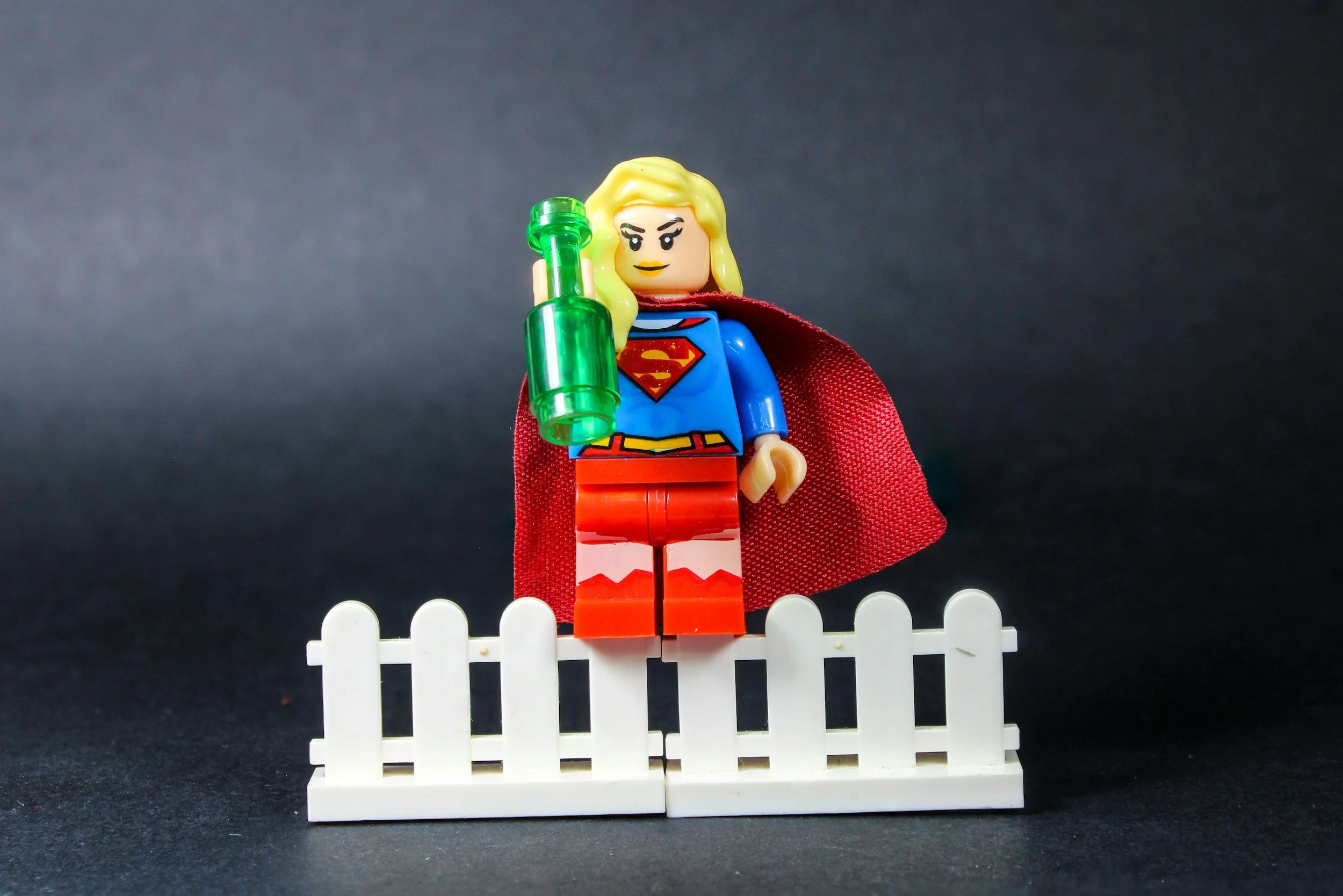
Here’s the part I didn’t expect — and it’s the thing I can’t stop thinking about:
In every superhero movie, the cape goes on when they’re saving people. Fighting the bad guys. Being needed.
But I feel like a superhero when I’m doing the opposite.
I feel like a superhero when I’m not available.
When I’m not responding.
When I’m not fixing.
When I’m not carrying everyone else’s problems as if they’re mine.
That’s the twist.
Because my “bad guys” aren’t villains. They’re urgency. Constant access. Being the default fixer. Minute-by-minute minutiae. The expectation — spoken or unspoken — that I will always show up, always solve, always hold it all.
And the truth is: that’s what strips the cape off.
Not work itself. Not responsibility itself.
It’s the constant recruitment back into being “on”.
What Week 1 made painfully clear
By the end of the week, a few things had become obvious — not as theory, but as lived experience:
Solitude isn’t a preference — it’s the mechanism. When I’m alone, my nervous system drops. When I’m managing conversation (or dogs), it doesn’t.
Aeroplane mode isn’t a tech setting — it’s a boundary. Being unreachable is medicine. aeroplane mode isn’t a tech setting — it’s a boundary.
Being unreachable is medicine. It’s also confronting, because it proves how conditioned I’ve become to be responsive.
The front door is the battleground. I don’t lose the cape on the walk. I lose it the minute I re-enter everyone’s needs — and default back into being reliable, available, and endlessly useful.
Flexibility matters — guilt doesn’t. Some days I have less time. I still walk. I don’t punish myself for being human.
And finally, yes guilt shows up right on schedule. Taking two hours for yourself triggers guilt — especially when you’re used to being “the responsible one”. But this isn’t selfish. It’s essential.
Week 2: availability redesign
Week 2 isn’t about walking further.
It’s about keeping the state I create on the walk — and carrying it into real life.
Because the hardest part isn’t becoming Superwoman at dawn.
It’s staying with her when the day starts asking for me.
So, this week I’m running a different kind of experiment. Not more “self-care”. Not more habits.
Availability redesign.
Here are three tests I’m running with a goal of wearing my Superhero cape into the day:
The Hand-Off Test
Every time someone brings me a problem, I’m going to ask:
“What have you tried?” and “What do you think we should do next?”
(Not because I don’t care — but because I’m not here to be the default rescuer.)
Response Windows
I’m only going to check messages and emails at set times.
Not all day. Not constantly. Not reflexively.
One Fire a Day
I’m allowed to solve one high-drama problem per day.
Everything else gets parked, delegated, or scheduled.
Because not everything is urgent — it just arrives sounding like it is.
I have no idea which of these will work, if any. I just know I’m done with the version of “hero” that looks like exhaustion and decision fatigue.
The Locamino isn’t a place.
It’s where you earn your cape and work out how to wear it.
And the real pilgrimage isn’t the kilometres.
It’s refusing to take the cape off at the front door when you return.
I can’t go to Spain so I am bringing the camino here
“I did it again,”
I whispered to myself.
I had reached the point of complete burnout. Again.
For the past five years, I’ve found myself here at the same time every year.
Every New Year, I promise myself it will be different. I will be different. I will make different choices. The years keep changing, but the way I feel hasn’t.
In August, I gave myself a month off. I’d wanted to do the Tour du Mont Blanc for as long as I could remember, and each year I’d put it off. Work always got in the way. This year, I made a promise to myself: it is happening. So I booked it.
Like every other break I’ve ever had, I arrived at the airport on departure day exhausted, questioning whether the ridiculous hours I’d worked in the weeks before were worth the time away at all knowing it would take me most of the break just to recover. I also started questioning my choice to do such a strenuous hike with “preparation” that mostly consisted of daily dog walks to the café and back, which was I guess was at least 3 kilometres away - and I had to get home.
I arrived in Geneva the next day and, with no time or patience for jet lag, we walked around the very clean and shiny (not to mention hideously expensive) city. The sun was out. Lake Geneva glistened. It felt polished, impressive, and slightly unreal.
But it wasn’t until we reached Chamonix, France, the following day that I felt like I could actually breathe out. Really breathe out.
Chamonix is an adventurer’s wonderland — breathtakingly beautiful, sitting at the base of Mont Blanc, alive with hikers and climbers and people who look like they belong outdoors. The place was alive. It was time for me to feel the same.
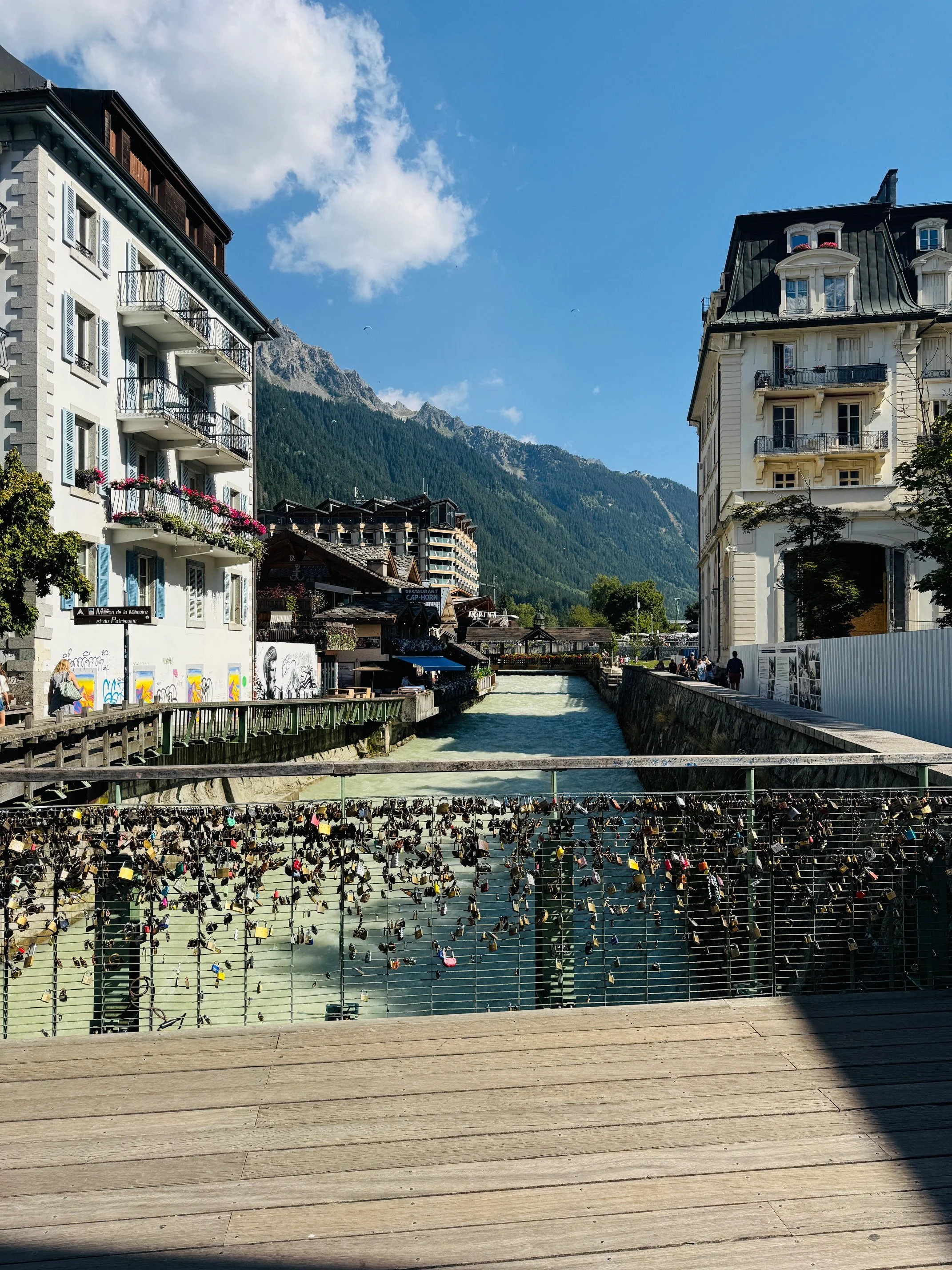
Chamonix - Photo Sally Coates
We started the next morning, setting off at 6:30 am to take the gondola up to the trailhead. As we waited, surrounded by other hikers, there was that mix of excitement and uncertainty about what lay ahead. I’d done a couple of challenging hikes, but well over a decade earlier, so I was nervous — and of course, excited. Seven days through France, Italy and Switzerland. No phone service. No email. I repeat, NO email. Joy!
The hike was more challenging than I expected. There were moments when my heart was beating so hard and fast I thought it might pop out of my chest. I got severe sunstroke on day two and ended up with heavy blistering on both arms — hideously painful. My big toes turned black and each night, I fell into bed exhausted.
And yet, for every moment of that seven-day hike, I felt alive. Truly alive.
My body was pushed. My mind stayed focused on each foot placement. My spirits kept lifting. The scenery felt like a movie set — too beautiful to be real. Other hikers were happy and friendly. We made it through each day without getting lost. We walked anywhere between fifteen and twenty-five kilometres a day, starting early, and finishing with enough time left to rest, reset, and reflect.
It was bliss.
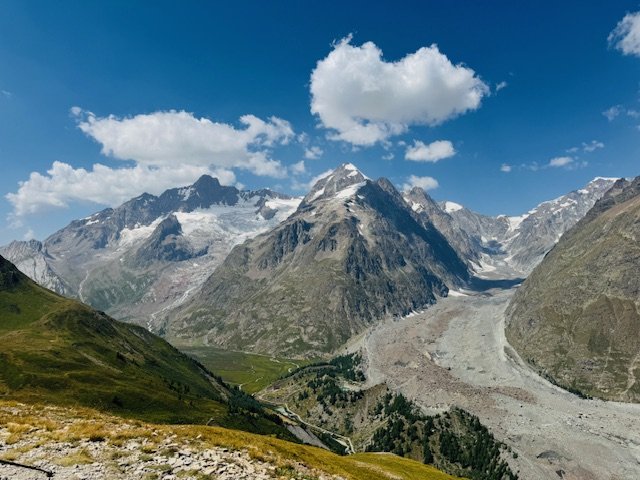
Photo from Tour Du Mont Blanc Hike - Sally Coates
I came home feeling invigorated, relaxed and energised.
And then reality hit.
I was back — back to a reality I had manage to escape in the mountains of Europe. A hard reality. I do hard. I’ve always done hard. But this was hard on a whole new level.
I returned eleven weeks ago and have had one weekend off while consistently working twelve- and fourteen-hour days. It has, without question, been one of the most challenging periods since I joined this business (and I led this business through COVID). Every year for the last five years, I’ve reached November feeling completely exhausted and burnt out — counting down the days until Christmas with a plan that a few days of rest will reverse months of damage to an already sketchy nervous system.
I wanted this year to be different. I wanted me to be different. After my trip, I genuinely thought it might happen for the first time in five years.
But reality had other plans.
I recently took time to reflect on the past eleven weeks — and much further back. But all I was left with were questions.
Was this it? Is this what my life was meant to be?
I want more. I want to be more. See more. Live more. Give more. But what does more even mean?
I feel invisible and small, but still expected to be the fixer of everything.
I wasn’t just tired. I was bone tired — tired of the constant pressure, the continuous and relentless demands, the constant need to “just keep going.”
Around that time, I’d been reading about the Camino de Santiago — a pilgrimage that people describe as life-changing: peace, clarity, perspective, personal discovery. And as I sat there worn down and exhausted, all I wanted to do was jump on a plane to Spain, become a pilgrim, and walk until the noise fell away.
But when you run a business, you don’t have the luxury of disappearing for forty days.
So I asked a different question.
If I can’t go to the Camino… how do I recreate it here?
Tomorrow, I start my own Camino. Right where I will be.
I’m calling it Locamino — a local Camino.
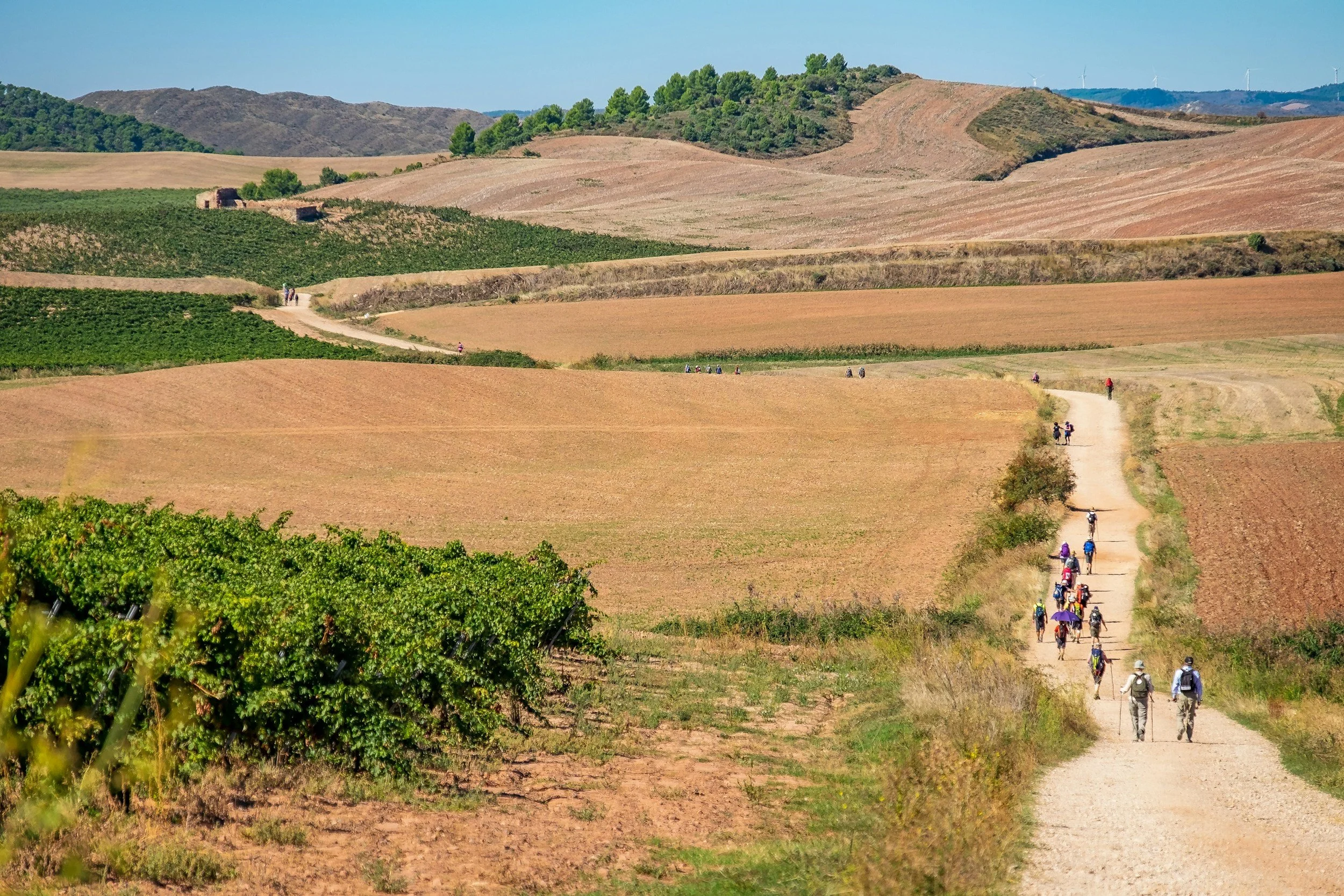
I’ll walk 320 kilometres throughout December, roughly the length of the Camino Primitivo (the original route). Instead of finishing another year burnt out and exhausted, I’m finishing this one energised — and clear on who I want to be in 2026.
There’s no plane ticket to Spain. No forty-day escape.
Just me, the dark, and two hours of space before the world wakes up and needs me.
Here’s what I’m committing to:
Every morning at 4:15 am, I start with my journal and the prompts I’ve prepared. Then I walk around 10 kilometres every day for 31 days. Weather irrelevant. While still running a business.
I’m not doing this for fitness. I’m doing it as a practice.
Daily walking. Disconnection. Solitude. Ritual.
And I’m going to pay attention to what happens as the days stack up — the physical breaking, the emotional release, the clarity, the integration. Not because I’ve mastered any of this, but because I need it. Because I want my life back.
I’m documenting it as I go — the struggle, the breakthroughs, the days I want to quit, the days something shifts.
Why?
Because I know I’m not alone in this. So many women feel exactly what I feel — exhausted, carrying too much, quietly asking, is this it? Wanting more, but not knowing what “more” even looks like.
And because I’m done with reaching November, burnt out, exhausted, and feeling completely invisible.
I don’t know what I’ll find on these walks. I don’t know who I’ll be on 31 December. I don’t even know if I’ll make it past Day 7 without wanting to quit.
But I’m doing it anyway.
If you want to follow along, please do. I’ll be posting on Instagram @sallyacoates and writing weekly reflections here.
If this sounds familiar — the burnout, the invisibility, the longing for more — you’re not alone.
Walk with me.
"WTF! You've set me on fire!"
"WTF! You've set me on fire!"
This was exactly what my legs screamed to my mind today.
My mind responded with:
"Oh, for f*** sake! This is a small rise, not an enormous and endless hill".
My body was in the middle of all of this. Listening with amusement.
Around 18 months ago, I attended a conference that featured a talk on brain health. It had me enthralled.
One of the key messages I took away from the talk was the significant benefits mountain bike riding has on your brain and mental health. The speaker pointed out that mountain bike riding enabled your brain to shut off to the noise and stress that many of us experience on what feels like, an ongoing basis. It shuts off the noise because when riding, you are so focused that you don't have time to think. You are focused on navigating your way, being alert for holes, branches, and any other potential hazards along the way. You are focused on gear changes, getting up hills, and making it through ravines. You are focused on water intake and staying in your saddle, as falling off would surely hurt.
I was sold! I had spent years trying to find a solution to quieten the constant noise in my head and had failed. Time and time again.
If I sat down to read or relax, the voice in my head would take over,
"You can't be relaxing. You need to do something. You need to do more...".
Here I was being shown a way to pause the banter. By this point, I would have tried anything.
The following weekend, off to the bike shop I went. The guy in the shop humoured me (well, kind of). I hadn't really owned or ridden a bike properly since my very early teens. I had a few failed attempts in my 20s and 30s, but they ultimately ended up being high-priced dust collectors that never saw the light of day. This time, I was committed. I was committed to my brain health, dedicated to improving my mental health, and committed to attempting to turn off the constant dialogue in my head, if only for a short period of time.
Lured by a black stealth-like bike (turns out it was dark green outside of the shop - damn!), with a lever to raise and drop the seat (not touching the ground was my greatest fear), a new "more comfortable" seat, a water bottle and holder, new pedals and gloves, I was set. My partner shook his head as he put the new prized possession into the back of his car. "Let's see how long this lasts", I could see he was thinking.
The next day, we were out early. I was a little wobbly at first, and had no idea about gears (hey, my BMX bike from the '80s had back-pedal brakes and definitely no gears), but my patient partner, knowledgeable in bikes, gave me wise and helpful tutelage. I found my rhythm and at times didn't even have my breaks on all the way down a hill. A huge feat! I did this after realising that breaking down a hill could also be as likely to cause a fall as speeding down the hill. A** over the handlebars is not how I wanted my first ride to end.
My heart was racing (which my watch confirmed). My elevated heart rate a healthy mix of exertion, fear, and excitement. I was loving the sound of the ground beneath me, the wind in my face and the clarity of my mind. They were right! I was so busy focusing on staying on the bike that I didn't have any time to think about anything else.
Back at the car, I felt amazing. We had covered over 10 kilometres of the vast National Park (yes, short for many, I know - but hey, baby steps). I had stayed on and become more comfortable with the gears and the seat, but most importantly, my mind had a break from the day-to-day worry and stress. I felt so grateful and exhilarated. I was definitely doing that again! Was I hooked? Not quite. But I was certainly open to spending more time on my bike.
We went out again a few weeks later and a few times after that, and then the bike hung in the garage and grew dust.
For the past 10 weeks, I have made a promise to myself. "This weekend you will go out on your bike. You need a break. Your mind needs a break", and for 10 weeks, I have broken that promise.
I have faced enormous challenges at work, which have required me to work six or seven days a week, leaving me with no time and definitely no energy to do anything else, let alone ride a bike. However, what has been the most difficult for me to accept is the constant promises I break to myself.
This really got me thinking. Why do I do this? I wouldn't break promises to others, so why do I break the promises I make to myself? This certainly wasn't the first time this had happened, but would it be the last time? Could it be the last?
This breaking of promises to ourselves, whether significant or seemingly insignificant, does build up. It becomes our natural default. Something else always seems to be more important than what we truly want or need for ourselves.
It happens when we put everything else before ourselves. It happens when we put everyone else before ourselves.
We put our jobs before our own needs. We put our responsibilities to others before the responsibility we have to ourselves. We invest time and energy in others without the same investment in ourselves. We treat others with care, compassion, and kindness —the same care, compassion, and kindness that we often do not extend to ourselves.
Today, I decided to keep the promise I made to myself and went out on my bike. For 17kms (yes, I have progressed), I was gripping ever so tightly to my handlebars (when I wasn't using one hand to rid my face of the flies using it as a landing pad). My legs were burning and my heart was pounding, but my mind...it was clear.
It was free from the stress and worry I had been experiencing. It was free from the thought of an overwhelming "to-do" list, and free to take in the beauty surrounding me and to enjoy the singing of the birds making themselves known to me as I pedalled past. My mind also had some time and space to come up with a product idea for people with a lot of hair to use when wearing a helmet, and the time to wonder if it already existed. I did, however, have to stop myself from whipping out my phone to ask my friend ChatGPT if it in fact did or did not already exist. Let's be honest, I didn't have a space hand.
For anyone who hasn't been on a trail before, whether on foot or on a bike, I couldn't recommend it more. The fresh air, peace, tranquillity and calmness it provides is truly captivating. But what strikes me every time is the friendliness on the trail. The people you come across are happy and obviously enjoying themselves. And for those (and there are genuinely not many) who aren't, I have no doubt they have more on their mind than a big ride could potentially reduce, but they are out there giving it a go all the same.
Today I learnt a big lesson—a lesson in keeping promises. I need to respect myself more and keep the promises I make to myself. I wouldn't break promises to others, so I need to stop breaking them with myself. It starts off small and can be easy to dismiss, but then we fall into destructive patterns and seem to do it constantly. We no longer look out for ourselves, do the best for ourselves, and we let ourselves down in a way we would never do to others. We lose sight of what we need most.
Today I made a promise to keep my promises. To stop letting myself down. Today is day one. Day one of many. I am off now. I need to pack a bag for the morning. I am off to the pool. A place I love. A place I have been away from, away from because I put other things first. Tomorrow morning, I am putting myself first, and it is going to hurt; it has been a while, but it is going to feel f****** fantastic at the same time.
What promise are you going to keep to yourself?
Bike Tips:
Buy a bike with front and back suspension. Mine is front only, and I have been getting a shocking headache from the beginning of each ride. This could be due to the constant bouncing around or the tension and stress I unknowingly put on my jaw and neck from fear. Could be both. Paracetamol does help.
Take the bike outside to check the colour when purchasing. When you want black, you want black!
Pack bug spray at all times. We seem to have a fly plague at the moment. Riding with one hand while violently shooing flies away from your face is rather hazardous for a beginner.
Learn to breathe through your nose, not your mouth. Yes, hard when dying up a hill, I mean, a slight rise, but back to the flies, swallowing one of those would be sure to put a dampener on the day.
A woman needs to design a helmet. Who wants hair on your neck? Not me.

I asked someone to be my Mentor and they said “No”.
I decided to take my own advice and reach out to a potential Mentor. It taught me more than I thought it would.
I have been incredibly fortunate over my career to have had the support of so many in the form of formal and also informal Mentors. Many of these very kind and generous people may not have even known they were acting as a Mentor to me. They have guided and supported me throughout my career and, without question, have played a part in the person I am today.
I have always felt that it was my job and responsibility to support others in the same way others so generously helped me. We need to share our knowledge and experience with others (good and bad) so that they can learn and grow. It is a privilege if I can help anyone, even if it is in a small way. What is the point of having so much knowledge if you don't share it?
As the Founder of The Retail Mentors, I facilitate a voluntary mentoring program and have the absolute privilege of matching Mentees with volunteer Mentors from around the globe. Witnessing the life-changing experience this is for both the Mentee and Mentor is an honour. With the support of a Mentor, people have found new jobs, moved countries for roles that will offer them and their families a new life, grown businesses, launched businesses, and developed goals that they never thought were possible, to name a few. So does Mentoring work? In these instances (of which there are many more), yes. Without question.
As someone who is such an advocate and supporter of Mentoring, I decided it was time to look at forming a new Mentoring relationship myself. I was unsure who that would be until I read a particular book.
I have admired someone who has been a global retail industry icon for many years. I have read their articles, listened to their podcasts, watched their TV appearances, and inhaled their books. Their candidness, honesty, and passion has always resonated with me deeply, and I have often found myself yelling "YES!" out to the world, agreeing with her views. So when I read one of her books that said we should all reach out and ask someone to be your sponsor (instead of using the word Mentor) as they would be thrilled to be asked, I saw this as a sign. I wanted her to be my Mentor. I mean sponsor.
So I procrastinated for some time before I took my own advice and sent her a message. I decided the worst thing that could happen was that she didn't respond. And I waited, but I didn't have to wait for long.
She responded! Yes, she did! She took the time and responded in such a thoughtful way. She was humble, kind, and thankful for my message. She made me feel so grateful to her when I read the words "love what you're doing ." She, unfortunately, couldn't Mentor me, and couldn't because of a reason that taught me so much. Her diary, she replied, is "exploding," and therefore needs to say no, which is her "self-care kicking in."
I didn't think I could love Mary Portas more until I received her message. I admire her for taking the time to write to me. I admire her for saying no so thoughtfully. But most importantly, I admire her for putting herself first and saying no. While Mary can't Mentor me in person, I know I can learn from her as I have already. I can learn from her thoughtfulness in taking the time to respond. I can learn from her for always being honest and authentic. But more importantly, I can learn to say no when it doesn't suit me, just as she did.
Thank you, Mary. Thank you for writing to me, and thank you for the lessons you don't even know you taught. While we will not spend time together, I know I can keep learning from you through your books and everything else you put out into the world.
As for Mentoring, and for reaching out to people, I am still a great advocate of both which is why I will continue to help others find the perfect mentor and am grateful for the fact that I have a number I can call on for myself.
Find out more about the voluntary mentoring program on the website The Retail Mentors .
